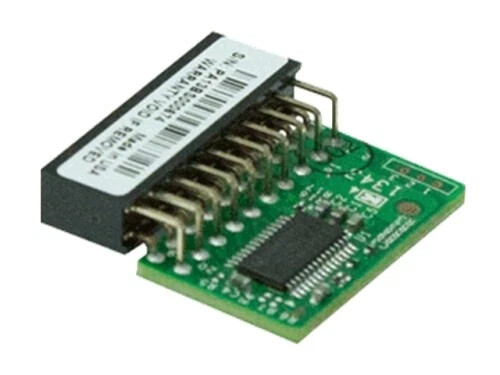
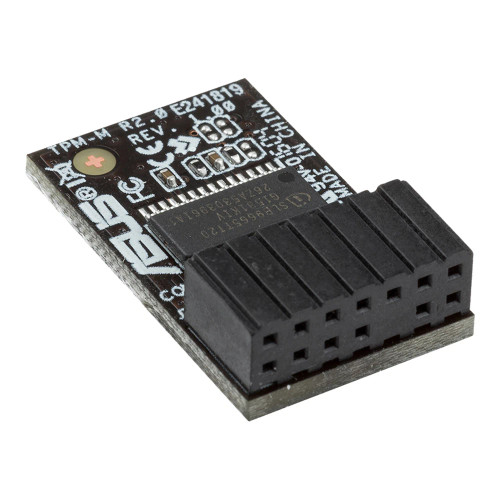
AOM-TPM-9665V – 20-Pin TPM 2.0 Module – Trusted Platform Module for 20-Pin TPM Headers
Hardware root-of-trust add-in card for systems that use the 20-pin TPM header (Supermicro-style). Provides TPM 2.0 functions for secure boot, BitLocker, device identity, and platform attestation.
Description
This module plugs directly into a board’s 20-pin TPM header and exposes a TPM 2.0 device to the system firmware/OS. It’s ideal for enabling Windows and enterprise features that require a discrete TPM, or for replacing a missing/failed module in legacy and server platforms that do not support SPI/LPC 14-1 style TPM cards.
Technical Specifications
- TPM Standard: 2.0
- Header Type: 20-pin TPM (Supermicro-style pinout)
- Interface/Bus: TPM over LPC per board design
- Functions: Secure key storage, measured boot, device identity, attestation, BitLocker support
- Form Factor: Small plug-in daughtercard for motherboard header
- BIOS/UEFI: Requires board support for discrete TPM 2.0 module (enable in Setup)
Interchangeable / Replacement Part Numbers
✅ Confirmed Compatibility
Please note that the following list is not exhaustive. Compatibility depends on your system’s specific configuration. It’s essential to verify compatibility with your system or enclosure manufacturer prior to installation.
✔️ Motherboards and servers that feature a 20-pin TPM header (Supermicro-style)
✔️ Platforms documented to accept a 20-pin TPM 2.0 module
✔️ Systems requiring a discrete TPM 2.0 device for security/compliance features
☑️ Key Features
- ☑️ True hardware root-of-trust for encryption keys and credentials
- ☑️ Direct 20-pin plug-in – no cables or brackets required
- ☑️ TPM 2.0 support for modern OS security features
- ☑️ Compact, low-power design for servers and embedded boards
⚙️ Fit Notes
- This card fits 20-pin TPM headers only. It is not the 14-1 LPC TPM or 14-1 SPI_TPM style used by many desktop boards. Check your board silkscreen and manual before ordering.
- Observe Pin-1 orientation when installing.
- In BIOS/UEFI, enable Discrete TPM (disable firmware TPM such as PTT/fTPM if required).
- If reusing in another system, clear/initialize the TPM in firmware before enabling BitLocker or similar features.